

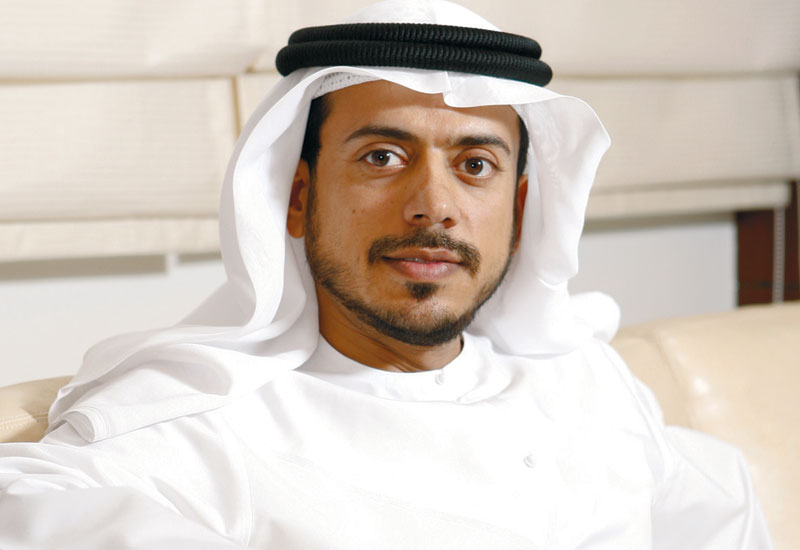
The winner of the AHIC 2010 Leadership Award, ADTA chairman HE Sheikh Sultan Bin Tahnoon Al Nahyan, reviews the development of Abu Dhabi’s hotel and tourism sector since the foundation of the authority in 2004 and reveals its ambitious goals for future growth
You have been chairman of ADTA since its inception in 2004. What do you count as your greatest achievements in this role?
This is the vision of Abu Dhabi — to diversify the economy, which is mainly dominated by the oil industry. Tourism is one of those tools to diversify the economy and part of the service industry that we are depending on to achieve that goal. The decision was taken in 2004 to create the authority; back then in Abu Dhabi the inventory was 8000 rooms; we are now at 17,000 rooms, we will add an additional 4500 to 5000 rooms this year, so we will cross 20,000 rooms in 2010.
When we first started we used to receive only 650,000 to 700,000 visitors a year — we achieved 1.5 million in 2009. So the growth is staggering. Although the crisis occurred, we experienced growth in visitors from 2008 to 2009. It was 1.45 million in 2008.
We revised the visitor target for 2012; we want to achieve 2.3 million from an initial target of 2.7 million. That’s based on the availability of hotel rooms, the economic crisis around the world. The economies that we depend on for our tourists are beginning to stabilise so we are back on track.
What strategies are in place to attract those visitors?
The major chunk of our visitors comes in the form of business tourism, which accounts for 80%. We want to increase leisure against business tourism in the future. Abu Dhabi has a great potential from that side. There is growth in the field on the leisure side, we have products coming in to the stream now like Desert Islands, an eco-tourism destination with wildlife experiences, sun and beach.
We want to focus in the future on the desert also, we believe that we have a unique desert feature by the Empty Quarter and the first product to open last November was the Qasr Al Sarab hotel, which the market received very well.
However, in business tourism we want to also increase our share through ADNEC, our exhibition centre. Three / four years ago ADNEC used to have only 15 major exhibitions, now we exceed 60 exhibitions, plus with conferences we have about 110 events at ADNEC alone and this is growing.
For the long term stability of tourism and to develop a healthy tourism sector we have to balance both [leisure and business]. We want to achieve the 50/50 balance. If there is any impact on one area, the other can offset it.
There are several new destinations such as Yas Island and Saadiyat Island; how will you drive people to hotels in these new locations?
Saadiyat specifically has international appeal, with its beaches, unique waterfront, as a sun and beach product close to the city, and it also has potential for conferences. Also once those cultural attractions [Louvre and Guggenheim museums] are in place, Saadiyat also will go through a new dimension in terms of international appeal — cultural visitors are the area that we are focusing on in the future as well. This is already tested and proved in Abu Dhabi, we organised many exhibitions, for example the Guggenheim one at Emirates Palace, which attracted a lot of international and also local visitors, plus a lot of cultural events like the classical music events are sold out.
What countries are visitors to Abu Dhabi coming from?
Of course Europe, because of proximity and flying time. UK and Germany are the focus, Scandinavian countries are also a focus, as is Italy. An area we are also focusing on now is east Asia, especially China. We have two offices in china — Shanghai and Beijing.
ADTA introduced its first hotel classification system last year, how has it been received? Are all the hotels officially classified now?
Yes. It was received very well because we developed the system with the hoteliers themselves. Since the inception of ADTA we were working on it and it was a long process but a very healthy one, so the buy-in was there when we announced it. Classification is very important for our destination because it’s a promise we give to our customers and once they are here they find the promise in place.
Do you find that helps with marketing hotels abroad?
Of course that helps a lot, especially with major players in the tourism industry — especially the tour operators, it’s very important to have the classification in place.
What are your views on diversification of the market?
This is part of the proposition for the tourism offering in Abu Dhabi. Those kind of hotel rooms are needed especially for business tourism. We will go by the market based on the supply and demand, so yes we encourage those kind of rooms especially to attract business tourism in general to Abu Dhabi.
Last year, ADTA director tourism standards Nasser Al Reyami told Hotelier he hoped one day there would be a hotel classification system applicable to the entire UAE. Is that something you see happening?
The good thing that I know about is a newly-created tourism and antiquities council created for the whole UAE and we are a member of this council. This is all to co-ordinate marketing and promotional activities under the umbrella of the UAE, also issues related to antiquities and heritage. I think maybe this is the vehicle that we can challenge this request through and I think it is a great thing; the tourism offering is increased for the tour operators. I think it would be very logical to have a unified hotel classification [system for the UAE].
Of course, to promote the whole UAE as one entity, there is great benefit for all the emirates and promotional entities.
Are there any specific, concrete plans to do that?
I don’t have the details but I know they have only just created [the council], they started last autumn. We don’t want to raise expectations, it’s a newly created entity, but this move is needed, it’s a step in the right direction, it’s coming and everyone is welcome there.
What events are coming up in Abu Dhabi that you are excited about?
The quality of events that we are hosting in Abu Dhabi now has improved dramatically in terms of quality, like the Formula 1. Sporting events is the area of focus for the future — not any sporting events, but the high level international sporting events. We signed a deal recently to host the Volvo Ocean Race — in the beginning of 2011 we will host one leg here.
Congratulations on being named AHIC’s 2010 Leadership Award winner — what would your advice be to people who want to work in the industry?
It’s an industry which is a future industry and an industry with sophistication that can [draw] people to work in it from all levels. Tourism is not only the hotel business, but a holistic service especially in Abu Dhabi that has a diversity of offering — natural, historical, cultural — so there is a lot of opportunities.
Are there enough training opportunities in the industry?
We are working on that. We have initiatives here at ADTA to train the industry, the hotels and to encourage people to work in the hotels, especially our locals. We have joint ventures and agreements with hotel schools; one we just had a meeting with was Hong Kong Polytechnic. We are also in negotiation with an American institution for hospitality in Las Vegas.
Do you find it hard to get Emiratis to work in tourism?
There is a challenge, yes. Less than 1% of employment in the sector is Emirati. By 2014 our target is to achieve 3%. The perception when we started wasn’t culturally that accepted, now they know it’s an industry, it’s a service industry, but as I said in Abu Dhabi, sometimes you don’t need to work in the hotel itself — on Sir Baniyas for example we have many opportunities related to wildlife management, tour operators, tour guides, and cultural attractions, there a lot of opportunities there.
HE SHEIKH SULTAN BIN TAHNOON AL NAHYAN
This month Abu Dhabi Tourism Authority (ADTA) and Tourism Development & Investment Company (TDIC) chairman Sheikh Sultan Bin Tahnoon Al Nahyan will be presented with the 2010 Leadership Award at the Arabian Hotel Investment Conference, held at Madinat Jumeirah from May 1-3.
As chairman of ADTA since 2004, Sheikh Sultan leads the organisation in managing and helping to develop and promote the emirate’s tourism industry. He has spearheaded the development of ADTA over the past five years into an international award-winning organisation which was named ‘Best Tourist Board’ in the 2009 World Travel Awards.
In his role as TDIC chairman, Sheikh Sultan has overseen the development of a number of flagship hotel properties, both TDIC-owned and other joint venture projects including the Shangri-la Qary’at Al Beri, Qasr Al Sarab Desert Resort by Anantara and The Desert Islands Resort & Spa managed by Anantara.
Sheikh Sultan is also chairman of the Abu Dhabi Authority for Culture and Heritage; Abu Dhabi National Exhibitions Company; Al Ain Wildlife Park and Resort; and most recently, the Eastern Region Development Committee.
