

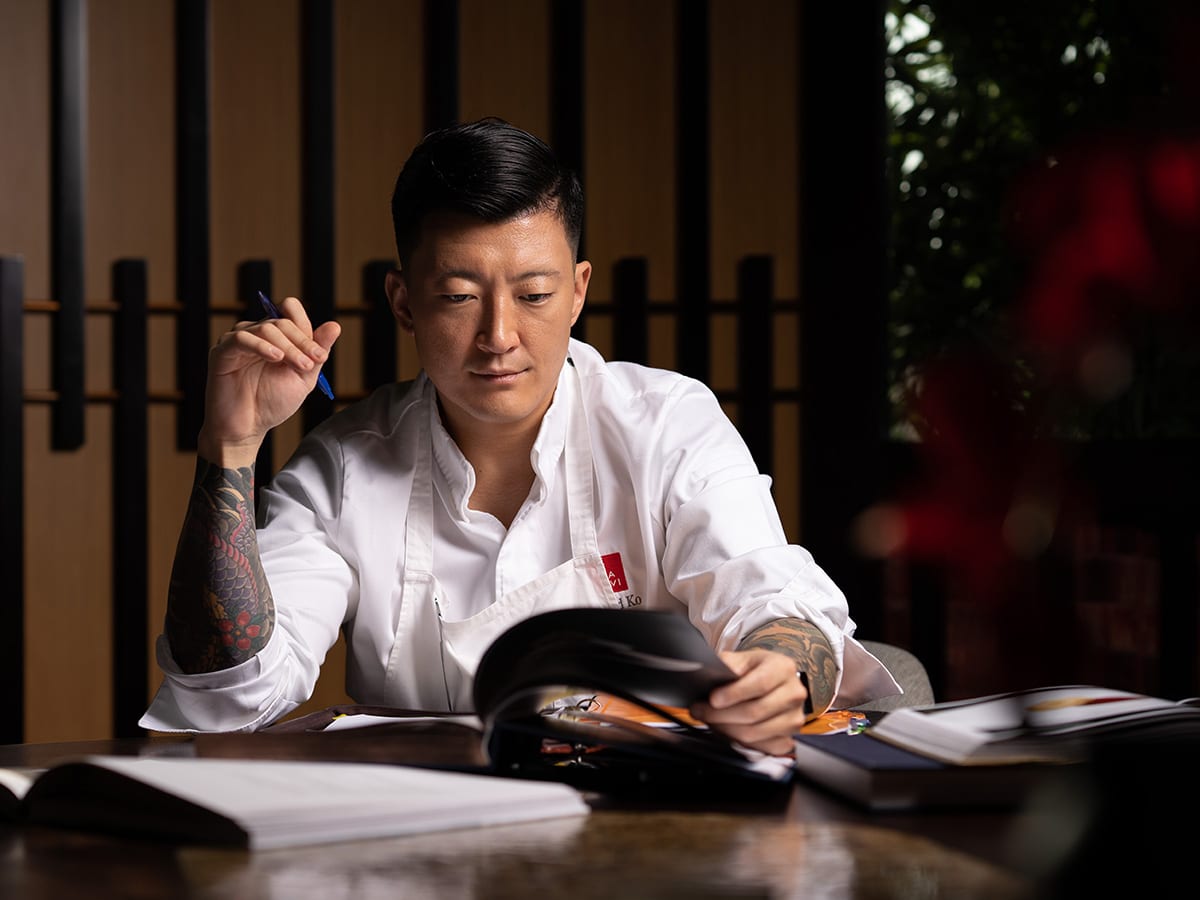
Howard Ko is the executive chef at the Asian restaurant CÉ LA VI Dubai. Raised in Los Angeles, Ko had a deep-rooted love for food and found himself exploring his curiosity in the kitchen throughout his childhood.
To pursue his dream of becoming a chef, he moved to New York to train at The Culinary Institute of America, which focuses on culinary, baking, and pastry arts education, with renowned alumni including Anthony Bourdain and Grant Achatz.
He began his culinary journey in 2006 at DANIEL, a Michelin-starred restaurant in New York from Daniel Boulud. He has worked with several lauded restaurants across New York and his home state of California, including Picholine, Restaurant Mélisse, The Restaurant at Meadowood and The French Laundry, where he worked alongside Timothy Hollingsworth, restaurateur and winner of Final Table.
Ko creates dishes using inspiration from his favourite food capitals of the world – Los Angeles, New York City, San Francisco, Shanghai and Tokyo.
Since the launch of CÉ LA VI Dubai in 2019, Ko has created seasonal menus that are changed throughout the year. Bringing over 11 years of culinary experience, Ko believes locally sourced produce and ingredients create the most flavourful dishes.
Ko is currently in the process of revamping the menu, which is set to launch by May. As a result, he is fully immersed in his research and development efforts.
Here, he shares a glimpse into his daily schedule marrying global inspiration with meticulous craftsmanship to create unforgettable dining experiences.
9am: I workout at the gym. I am currently bodybuilding, boxing and running in a sweat suit.
11am: I come in and check with the butchery for samples.
11.30am: I sample lunch sauces, including those for the meat station. I conduct quality control by tasting all purées. I also ensure the pantry stations are sampled and checked for taste.
Noon: That’s when the lunch service begins. I do a tasting mostly on the sautee and pasta side, and I assist in cooking if big orders are coming in.
3.30pm: I finish the lunch service and I make sure everyone is on track for the evening schedule.
4pm: I check emails and print out our quote of the day and cover flow that we tape up very neatly on the pass of the kitchen. This is to inspire routine, pride and motivation in our staff every day. I took this idea from when I was working at the French Laundry. I also take 30 minutes to read cook books and make notes of things to potentially try in the future.
4.45pm: I eat my meal plan. Despite my culinary skills, I am currently on a strict diet consisting of chicken, fish, or steak, vegetables, and 60g of brown rice. I taste everything, but I spit it out. After being in this business for so long, if I didn’t, I would be very overweight.
5.15pm: I sample items from the robata menu and do random checks on other dishes. These may include miso cod skewers, braised brisket lacquered in our sauce Japonaise, and grilled prawns dressed with our Vietnamese dressing, featuring Thai chilis, palm sugar, mint, and coriander. I also taste our wagyu tenderloin marinated in galbi sauce with wasabi kizami, making adjustments as needed. Again, I spit out the samples to ensure adherence to quality standards. I taste all vinaigrettes and dips on cold stations. I also taste vegetable, random sushis on the menu and the special of the day.
Additionally, I taste all the sauces. We have about nine to ten, of beurre blanc, veal jus, chicken jus, and thickened broths made in a variety of ways.
We also do some projects and trials. I ate at Zen 3 in Singapore when I was the interim chef at CÉ LA VI Singapore. One of the most memorable things I had was a sauce on their fish course, which was a fermented white asparagus beurre blanc. I instantly called one of my friends who had worked there and asked how it was made and tried to make our own version of it.
I am a firm believer that everyone’s palate is different, so the cooks on their respective stations and also my senior chefs who are on duty, do tastings with me. This cultivates the palate and it’s a good moment to teach and make them gain a bigger understanding of my philosophy of cooking, as I learned from all the Michelin star chefs I trained under.
6pm: Dinner service starts. I brief the team about mistakes I have seen in the past and ways to adjust and excel as chefs. The dinner service keeps going until midnight. I will usually stay until 11 pm or, if needed, later, depending on my senior chefs who are on the pass and the group events we have.
Midnight: At the end of the night I will write a report to my senior team about what I observed during service that we need to work on, and we also use this for the briefing the day after to talk about inspiring ideas which can come from me or anyone in the kitchen, as we try to create a creative hub for all chefs who work here.