


With reams of hotels in the region today embracing eco-friendly ethos wholeheartedly across their operations, there has never been a better time for sustainability.
Championing luxury with a conscience is emerging as an imperative for the region’s hotels.
Hotelier Middle East takes a look at how a new generation of hotels are in the region are shaping a new era for the luxury hospitality landscape with sustainability at the forefront.
Green initiatives and increased community engagement
Engaging the community and eco-initiatives are becoming key in the sustainability drive of the region’s hotels. 25hours Hotel Dubai One Central in collaboration with EEG Dubai, has launched its Plant a Tree initiative where in guests at the hotel are encouraged to forgo daily room cleaning in exchange for a EUR5 donation, which goes towards planting a tree. “We strive to spread the by proposing sustainable initiatives that resonate with our community says Margo Stieg, sustainable champion of 25hours Hotel One Central Duba, noting that “sustainability is a collective journey.” The hotel has also made significant strides in energy efficiency. Light and air conditioning sensors are installed throughout the property, optimising energy usage and reducing the hotel’s carbon footprint. This approach extends beyond energy conservation to waste management.

Over the past two years, the hotel has collected over 80,000 cans, collaborating with artists and institutions to recycle these into sustainable art projects.
“Through interactive activations in collaboration with local and impactful sustainable initiatives in the region, we join forces and spread information putting light on the topic,” adds Stieg.
Rove Hotels, too, has implemented an array of measures to reduce their environmental footprint, including replacing plastic bottles with refillable glass ones and composting all food waste, integrating it into every aspect of hotel operation. The property has composted 100 percent of its food waste. “We also use LED lights to cut down electricity consumption by 75 percent, solar power for water heating and have digitalised our check-in process to reduce our paper consumption by 90 percent,” shares Paul Bridger, COO of Rove Hotels.

Advancing sustainable tourism
Other hotels, like Nikki Beach Dubai Resort & Spa Dubai, have taken a comprehensive sustainability approach. The resort has launched a water bottling plant as part of the Dubai Can Initiative, aiming to eliminate single-use plastic bottles and reduce plastic waste significantly. The property also actively participates in the ZERO FOOD WASTE initiative, contributing to the Ramadan 3 Million Meal Initiative, aimed at combating food wastage.
The resort established a waste management system that efficiently collected recyclables and non-recyclables to avoid plastic pollution and waste ending up in the ocean or landfills, and has already collected over 10,000 kg of mixed paper and cardboard in the last five months, with an ambitious target of reaching 20,000 kg by the end of 2023.
“On top of that, 369 kg of aluminium tin and an astounding 18,422 kg of glass were collected during the same time period,” says Saeed Muhammad, health & safety manager at Nikki Beach Resort & Spa Dubai.“The resort has implemented an energy management system, which significantly reduced electricity and cooling use by three percent and six percent, respectively, over the course of 2021 to 2022,” Muhammad adds.
The JW Marriott Marquis Hotel Dubai has also made significant strides towards sustainability. They have replaced single-use plastic bottles in their dining restaurant with premium filtered water and invested in organic compost machines.
“We have replaced 200 1.5-litre plastic bottles per day in our all-day dining restaurant with premium filtered water, to reduce plastic consumption and promote a culture of responsible water usage,” shares Andrew Astley, multi-property director of engineering at JW Marriott Marquis Hotel Dubai. The property is also exploring and implementing sustainable practices across various facets of its operations, “from energy-efficient lights, and low-flow shower heads to reusable water bottles & water stations.”
Green cuisine
For other properties, the approach to sustainability is centred around food. Waldorf Astoria Doha West Bay embraces this through a food waste management system in its all day dining restaurant, and a ‘No Food Waste Day’ monthly in its team members restaurant.
“We are very mindful about our advantageous access to a vast choice of quality food, and valuing this in a sustainable operational environment and culture,” says Joost H.P.E. Folkers, Director of Operations, Waldorf Astoria Doha West Bay.
At Hilton Ras Al Khaimah Beach Resort, sustainability is woven into their culinary ethos. “Our new Organic Garden not only showcases our dedication to culinary excellence but also represents a profound connection with nature and a commitment to sustainability,” said Arthur Timlin, director of operations at Hilton Ras Al Khaimah Beach Resort.


The organic garden means that alongside reaping benefits of being able to step up sustainability, the resort is able to create more immersive dining experiences for patrons by cultivating their own produce.
“Guests can indulge in dishes crafted with hand-picked ingredients bursting with freshness and flavour, all while knowing that every bite supports our mission to minimise our ecological impact,” notes Timlin.
Nikki Beach has constructed a sustainable hydroponic farm, which supplies organic vegetables for the kitchen while JW Marriott Marquis Hotel Dubai across the property’s kitchens has invested in two 500KG organic compost machines, which processes food waste, transforming it into nutrient-rich compost.
“This not only minimises our contribution to landfills but also supports the growth of our on-site landscaping initiatives and herb garden,” Astley shares.
Eco-friendly innovation
Others like The H Hotel in Dubai take an innovative and comprehensive approach to sustainability. Their focus on Reduce, Reuse, & Recycle, Water Conservation, Energy Efficiency, Local Care & Fair Trade which is evident in their Green Key Certification and initiatives like a biodigester and water filtration system.
“Engaging stakeholders is pivotal,” says Sophie Blondel, general manager, The H Hotel. The property encourages guests to contribute to its initiatives through small rewards during their stay with us. “Together, we want to leave a positive and lasting impact on our planet,” Blondel remarks.
Rosewood Abu Dhabi, meanwhile, focuses on circular hospitality and environmental leadership through smart building management systems and water-efficient aerators. The property increasingly commits to the Rosewood Impacts program through the pillars of Rosewood Sustains and Rosewood Empowers.
“Rosewood Empowers emphasises community enrichment and employee well-being, with initiatives such as community volunteering, sustainable living workshops, and wellness sessions,” shares Daniella Isimbi, ESG trainee, Rosewood Abu Dhabi. “These endeavours are geared towards ensuring our associates have an unparalleled and enriching experience at Rosewood.”


Future-oriented and eco-conscious hospitality
Sustainability is at the heart of operations and decision-making processes – as made evident everywhere you look at Mandarin Oriental Jumeira, Dubai through several innovative, green initiatives.
Within its hotel restrooms, the hotel has halved water usage simply by installing water-saving taps in 2022. Poolside, it has Kind by M.O. – an eco-conscious concept store which offers sustainable resort wear to encourage conscious consumerism.
Then, off the coast of Fujairah, it has also created an artificial reef. “We are currently on track to achieve Mandarin Oriental Hotel Group’s 2030 targets to reduce carbon intensity by 50 percent, energy intensity by 30 percent and water intensity by 40 percent,” says Sara Codner, sustainability champion and area director of spa & wellness, Middle East at Mandarin Oriental Hotel Group.
ME Dubai has implemented a comprehensive sustainability strategy aimed at conserving natural resources and contributing to the region’s eco-conscious practices. The hotel transitioned from traditional paper business cards to eco-friendly NFC cards and offers refilling dispensers for bathroom amenities such as shower gel and shampoo, reducing waste and eliminating single-use plastic as well as implementing a “Change Towel Program” in the rooms, which incorporates a water management plan and means guests only receive new towels when required.
Harnessing the power of sound, ME Dubai installed VITA Tronic, a space harmoniser that creates harmonious balance in the electro-technological environment and improves air quality within the premises and reduces EMF pollution. In an effort to transition to a more sustainable energy model in their swimming pool, the hotel installed AQUA VITA Life, a patented water vitalier and chalk transformer that revitalises water from its natural source, achieving optimal energising to promote vitality.

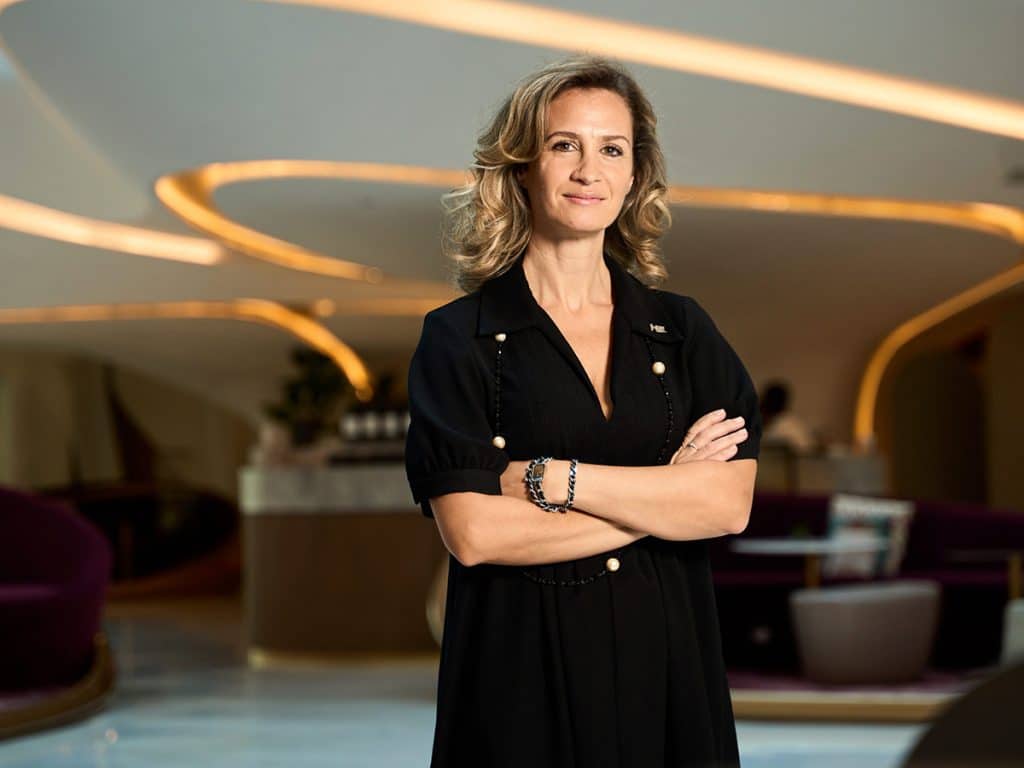
“Taking a proactive approach to reduce its environmental impact, ME Dubai aims to raise awareness among its guests, visitors, and staff as they take part in the lifelong journey towards a greener and more sustainable future,” says Elsa Lahoude, the GM.
Taking sustainable practices even beyond the resort, DoubleTree by Hilton Resort & Spa Marjan Island has contributed to initiatives like safeguarding the planet by reducing carbon emissions equivalent to 2,961 cars off the road, water consumption equivalent to 332 Olympics swimming pools. It aided in preventing 60,000 plastic bottles weighing 684kgs from entering the ocean in partnership with Ocean Bottle.
Hilton’s Travel with Purpose is integrated through every aspect of the property’s business, including operations and supply chain as well as engagement with communities which aims to redefine and advance sustainable travel globally. The property also planted 600 mangrove seedlings to increase the UAE’s green plot. “We’re dedicated to a future where our daily hotel practices mirror the highest environmental standards, promoting not just luxury but a legacy of sustainability,” Pieter van Beugen, general manager, DoubleTree by Hilton Resort & Spa Marjan Island states.
Placing environmental responsibility at the forefront of its ethos, DoubleTree by Hilton Resort & Spa Marjan Island partnered with Ocean Bottle to contribute to a larger movement of preserving oceans for future generations. “Each bottle represents our unyielding effort to prevent plastic waste, akin to removing 1,000 single-use bottles per purchase, and contributes to a larger movement of preserving our oceans for future generations,” remarks Pieter van Beugen, general manager, DoubleTree by Hilton Resort & Spa Marjan Island.
Nikki Beach Resort & Spa Dubai has partnered with SEA CHANGE, an ethically sourced and eco-friendly wine brand to minimise packaging to reduce environmental impact, using lighter-weight glass bottles, renewable plant-based closures, and labels made from sustainable forests. “With every 75cl bottle of SEA CHANGE wine purchased, a minimum of EUR0.25 is contributed to charity partners, aligning with resort’s commitment to giving back to the community and the environment,” says James Hawkes, executive chef at Nikki Beach Resort & Spa Dubai.

Immersing guests in sustainability
Engulfing guests in eco-conscious practices, 25 Hours Dubai, in an exciting collaboration with Hempy People Trading, a leading sustainability partner based in Dubai kicked off a two-week-long interactive Hemp Experience. This unique attraction offered an interesting exploration of industrial hemp and its myriad applications.
“Partnering with Hempy People Trading has allowed us to infuse sustainable practices into our hotel premises, providing visitors with a captivating and educational journey,” says Margo Stieg, sustainable champion of 25hours Hotel One Central Dubai.
The Hemp Nap relaxation station was created, which invites guests to experience tranquillity in a hemp ambience, complemented by environmentally friendly furnishings crafted from sustainable hemp materials. The collaboration has extended to Hemp Information Puzzles, engaging games that challenge visitors’ knowledge about hemp and its role in sustainable living. To further enhance the experience, The Hemp Harbinger’ a special journal, is available around the co-working spaces, featuring industrial hemp news and ideas on exquisite handmade hemp paper sourced from the Himalayas, a nod to both artistry and sustainability. This partnership with Hempy People Trading as per the property not only elevates the sustainability profile of the hotel but also creates a meaningful and immersive experience for our community, promoting the principles of sustainable living. “We look forward to future collaborations with innovative and impactful sustainable suppliers,” says Stieg.
Clean collaborations
Waldorf Astoria Doha West Bay aims to supply products primarily from local manufacturers and aim to reduce the carbon footprint. “We use the cleaning supplies of Ecolab company, which has an Ecolable license,” director of operations, Joost H.P.E. Folkers shares.
Rove Hotels works with suppliers that are passionate about sustainability. Sprudel has enabled the hotel brand to eliminate single-use plastic from its hotels and replace it with re-fillable glass bottles. “Winnow technology measures food waste and provides insights for our chefs. Furthermore, on the F&B front, Dr. Mueller makes organic ice cream packaged in reusable containers. They are UAE-based, and their factory is powered by solar energy, making them quite sustainable,” shares Paul Bridger, COO of Rove.

Towards a greener future
One of Nikki Beach Dubai’s biggest sustainable projects last year was establishing the hydroponic farm, which maximised the use of local and sustainable produce and reduced the carbon footprint associated with ordering from suppliers.
The farm covers an area of 440 square feet and has proven to be a successful venture, with produce growing approximately 30 percent faster than traditional farms. This has allowed the hotel to significantly reduce the need to buy salad leaves from external suppliers, as around 90 percent of the lettuce and herbs used in the hotel are now sourced from the farm. “The farm consumes 90 percent less water than traditional agricultural farming methods, making it a sustainable and eco-friendly solution,” shares Hawkes.
ME Dubai is also committed to promoting a holistic and sustainable approach throughout every facet of our hotel.
“From installing VITA Tronic, a space harmoniser that balances the electro-technological environment by reducing the intensity of interference; AQUA VITA Life in our swimming pool, transitioning from paper business cards to eco-friendly NFC cards; or partnering with homegrown brand GreenTECH by AQUAcell, to promote long-term healthy practices, we are dedicated to partnering with suppliers that can help us reduce carbon footprints,” states Elsa Lahoude, the hotel’s GM.