


AMAALA and Red Sea Development Company (TRSDC) CEO John Pagano has ‘dispelled any notion’ that the Red Sea Project will comprise only of luxury and hyper-luxury hotels.
Pagano spoke to Hotelier Middle East just a few hours after the unveiling of the Reserve property. The latest in a string of five-star properties confirmed for the site, Pagano said he wanted to “dispel any notion” that the project is only high-end.
He said: “We do cater to that luxury segment – maybe 10 percent of our offerings is hyper-luxury – but our entry point into the destination will be four-stars. First of all, let me dispel any notion The Red Sea Project is only super high-end and exclusive, we’re not going to have six- and seven-star hotels everywhere.
“It’s a mix of four- and five-star hotels, and only a very small portion will sit in that hyper-luxury space. That being said, that 10 percent will comprise of resorts with a limited number of keys – think of a Maldivian resort with 80 keys. We have a strategic oversight over the whole project and we’re better able to decide on how we position each and every destination.
“We don’t want to cannibalise ourselves or over-supply in one segment. We will be able to offer something for everybody and we will have destinations much more mid-market.”
Other confirmed brands include EDITION Hotels and St Regis Hotels & Resorts, part of Marriott International; Fairmont Hotel & Resorts, Raffles Hotels & Resorts and SLS Hotels & Residences, part of global hospitality group Accor; Grand Hyatt, part of Hyatt Hotels Corporation; Intercontinental Hotels & Resorts and Six Senses, part of IHG Hotels & Resorts; and Jumeirah Hotels & Resorts.
More recently, Hyatt’s wellness-focused Miraval; and Rosewood have also been confirmed.
John Pagano talks holiday homes
The Red Sea Project will have its own holiday and second home market, one which will offer an alternative to deep-pocketed Saudis who spend their holidays in Dubai.
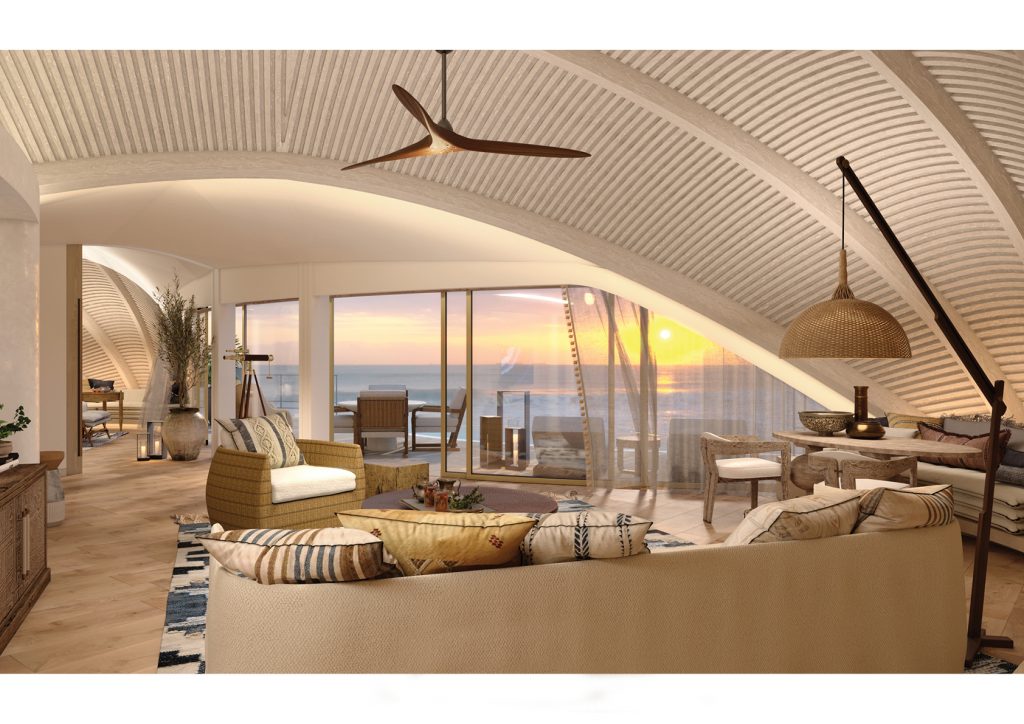
Upon completion in 2030, the Red Sea Project will have a total of 8,000 hotel rooms and around 1,000 residential keys. So far, The Ritz-Carlton Reserve on the project is confirmed to have 18 branded residences.
AMAALA and Red Sea Development Company (TRSDC) CEO John Pagano said these residences will not be used 24/7 by guests, rather they will be used as second homes.
Pagano said: “We don’t expect people to live there [on the Red Sea Project] full time. These are second homes. These are vacation properties that people buy, it’s no different from other parts of the world.
“If you look at the Caribbean… Also, I lived in the Bahamas before, there are huge second home markets there. People buy these places because they want to go frequently, people will want to come to The Red Sea Project time and again because it’s so beautiful, it’s so pristine, why not own a piece of that?
“Think of Dubai. How many Saudis buy second homes in Dubai? Why wouldn’t they want to be part of one of the most beautiful parts of Saudi?”
Standing alongside the five-star, historic Ritz-Carlton brand, Reserve is a highly-personalised, indigenously-designed off-shoot. Current Ritz-Carlton Reserve properties are located in Thailand, Japan, Indonesia, Puerto Rico, and Mexico.
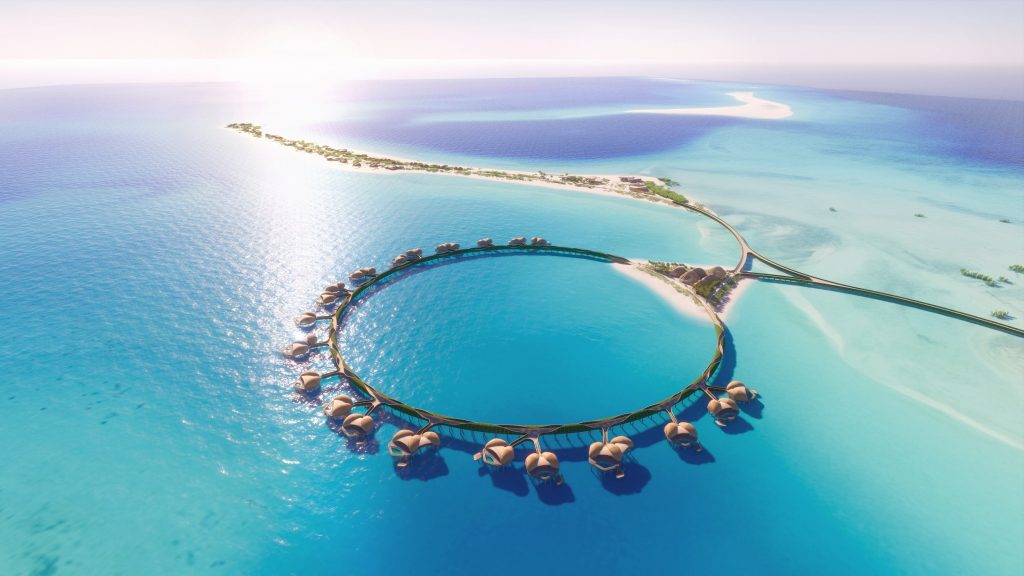
Nujuma will be situated on a pristine set of private islands, which are part of the Red Sea’s Blue Hole cluster of islands. Surrounded by natural beauty and designed to blend with the environment, the resort is expected to feature 63 one to four-bedroom water and beach villas. Plans also include a range of amenities and exceptional services including a spa, swimming pools, multiple culinary venues, a retail area and a variety of other leisure and entertainment offerings including a Conservation Center.