


Oman hoteliers from some of the country’s top-performing hotels are celebrating the Sultanate’s triumphant tourism results for 2021. In the final month of the year alone, revenues of three-to-five-star hotels amounted to RO17.6 million ($45.7 million), compared to RO7 million ($18.2 million) during the same month in 2020: Growth of 149.2 percent.
The results were announced by the National Centre for Statistics and Information (NCSI).
Despite the overall good feeling from the hoteliers we spoke to in Oman, there’s also a feeling that the country’s hospitality sector must “modernise, diversify and come up with fresh ideas” if it wants to keep challenging the Middle East’s big players in 2022 and beyond.
Shangri-La Muscat area general manager René D. Egle told Hotelier that December 2021 finally brought his properties out of “survival mode.” He said: “After a long period pushing boundaries and going out to the market with innovative and relevant ideas to ensure Shangri-La was the resort of choice for the domestic market, we encountered a major demand spike over the month of December 2021 from the international market.”

What made Oman hoteliers successful in 2021?
Beyond the resilience and hard work of his team, Egle attributed the year’s success to the vaccination push in Oman. He said: “During the month of December, Shangri-La Barr Al Jissah witnessed a strong pickup paired with a surge for revenge travel across key markets with air connectivity to Oman and this has doubled our occupancy rates YOY vs. December 2020.”
The number of guests in hotels reached 136,000 during December 2021, compared to 84,500 guests during the same period of the previous year, constituting a rise of 61.4 percent. The total revenues of hotels amounted to RO102 million ($265 million) for the year.
Chedi Muscat saw similar results, with its general manager Thomas Guss confirming 100 percent occupancy between December 24, 2021 and January 4, 2022. Sheraton Oman meanwhile confirmed it benefitted greatly from the domestic market over the same period.
Collaborating with people
Sheraton Oman’s general manager Samir Messaoudi was keen to share his own hotel’s victories throughout the year, but also stressed the importance of hotels collaborating should they want 2022 to go well.
Messaoudi said: “Oman is a very unified and gentle society, and very generous too. It requires transparency and sincerity in dealing with it. Hoteliers have always worked side by side and extended support to each other, whenever required. Different communities are being built based on their interests and areas of occupation.
“As a simple example, it happens that hotels get overbooked, but those cases are being resolved with the help of other hotels who are always ready to lend a helping hand.”
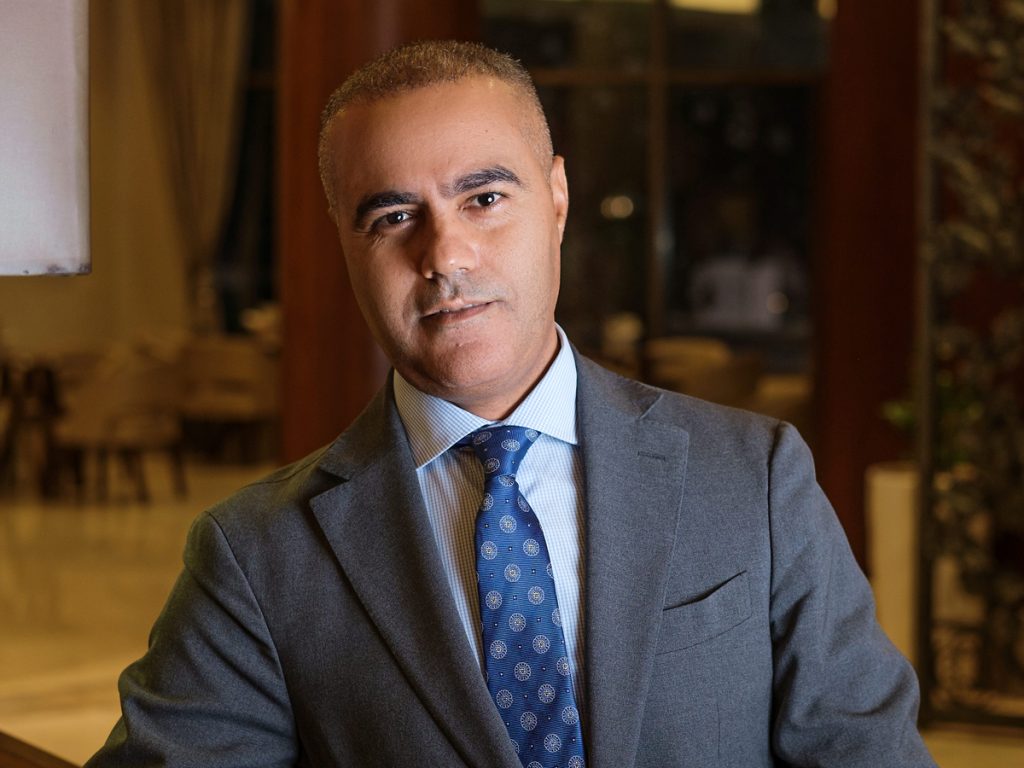
Anantara Al Jabal Al Akhdar Resort and Al Baleed Resort Salalah‘s DOSM Rania Choukair said the focus was on helping the entire fabric of Omani tourism.
She told Hotelier: “I have to admit that this is a very special practise by hotels in Oman. On many occasions, you will find properties working together on combined promotions to promote different regions within the destination. At Anantara, we have the privilege of promoting Oman’s sea and mountains, as our resorts are located in Salalah and Al Jabal Al Akhdar. It’s a very small community here of real hoteliers doing their utmost to promote destination Oman.”
Collaborating with ministires and businesses
Shangri-La’s Egle said hotels must continue to work with ministries: “Oman’s authenticity as a destination, diverse experiences, rich culture and heritage will be the key talking points that sets it uniquely apart in the region. As a sector, driving awareness to amplify these key points together with the cooperation with the Ministry of Heritage and Tourism will be key towards accelerating the road to recovery.”
The Chedi’s Guss believes tourism entities should work closely with hotel leaders to create a more concrete strategy for the future. He said: “The tourism sector needs a platform where all key stakeholders of the hospitality Industry come together and strategise for the future. With this, Oman will have a better chance to tackle the hurdles it is facing now.”
Guss also called on hospitality developers to work more on ‘diversifying’ Oman hospitality. He said: “Developers should come up with plans that make the destination even more attractive, like golf resorts or aqua parks hotels or theme parks.”

Modernisation in Oman
Sheraton’s Messaoudi said properties must find a way to balance “investment and conservation.” He explained: “Hoteliers need to reimagine their guests’ experiences and take deliberate action to maintain and build their trust. In an environment of dramatically lower revenues, high fixed costs, and less than optimal asset returns, hotels need to determine which areas to prioritise and invest in.
“We need to find the right balance between investment and conservation, one that achieves the highest ROI in the near to medium term. Some of these decisions will endure, others may not. But the decisions made in the months to come will have a lasting impact on the operating models of the hospitality sector for years to come.”

Egle added: “I think it’s important to use our learnings over the past year we as hoteliers pivoted from our traditional strategies, found new ways to drive business and be innovative to shape the future of travel and hospitality in the destination. The light at the end of the tunnel is near.”
Anantara’s Choukair put it simply: “Always think outside the box, be flexible, and remember to stay safe.”
The future is bright for Oman, much brighter than it has been for a long time. While revenues and occupancies continue to climb upwards for the Sulantate, it is clear there’s still work to be done to keep the country on the same path as other GCC states in terms of evolution.