

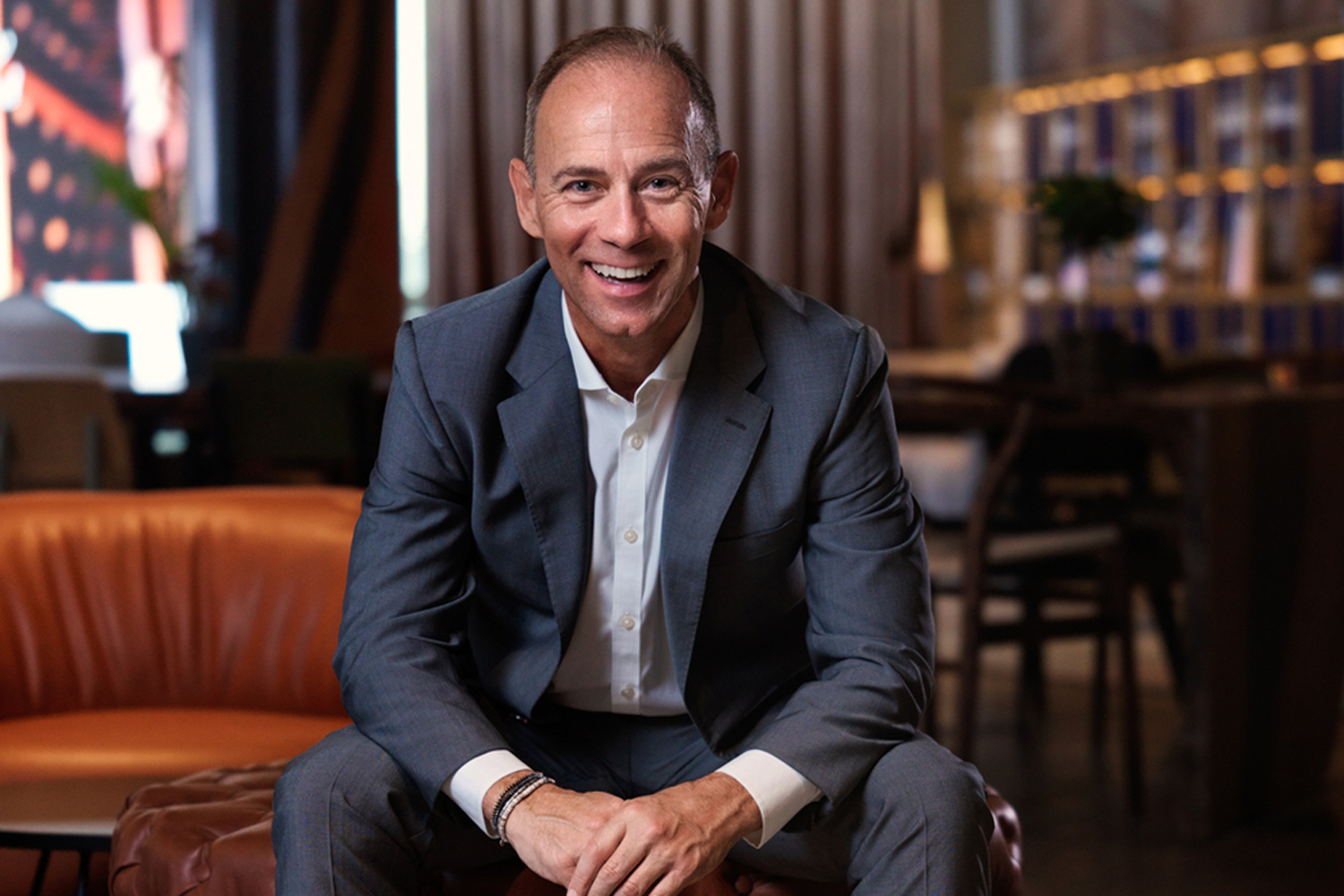
Accor is entering the residential business in Qatar ahead of the FIFA World Cup 2022.
In an exclusive interview with Hotelier Middle East, the hotel’s regional CEO Mark said the move will challenge Airbnb.
A massive deal to operate 60,000 residential units during the FIFA World Cup Qatar 2022 was signed in October.
Willis explained: “This isn’t the norm for us. We manage hotels. We do have subsidiary businesses like Kitch-In, but on the whole, we’re hotel operators. This is something special. It’s our chance to be part of this huge global event and we’re grateful for that opportunity.”
Q3 2021 was a record-breaking season for Airbnb. Capitalising on a wave of pent-up travel demand, the hosting giant boasted its highest revenue ever, clocking in at US$2.2 billion. Net income in the quarter hit $834 million, four times higher than Q3 2020.
Founded in 2008, in the quarter Airbnb recorded an income higher than Hilton, Hyatt, Marriott and Wyndham combined.
Entering the residential world
Willis added: “The idea is to provide a three-star-plus and four-star stay experience, over and above Airbnb where you just handover the keys. If you need make a call, if you need assistance, there will be housekeeping, reception services, our hygiene procedures will be there. From a service quality perspective, we’ll be in the apartments every day or every other day cleaning.”
To date, Accor has seven hotels in Qatar, including the super-luxurious Banyan Tree Doha and the Mondrian Doha Hotel, and has been operational in the country since 2001.
Willis continued: “I’m always open to a business opportunity. I’m happy to split my brain, I’m a commercial guy so if I see an opportunity, why not have a look at it? The staff there will be doing something in between traditional hospitality and residential services. Our people on the ground are hoteliers at the end of the day, they are very well versed to assist guests.”

Despite the short time frame of the World Cup, Accor is funnelling a massive amount of time and talent into the deal. Bringing in its top hoteliers from across the world to deliver a stellar ‘soft touch’ experience for football fans.
“There’s 60,000 units, we have 300 people on the ground already and will have 10,000 plus from a workforce perspective during the World Cup,” revealed Willis. “Leading it is our former head of our Makkah hotels where we have 8,000 rooms. So he’s used to big events, big inventory and an influx of travellers.
“Staffing can be scary but it’s all about planning. The senior people on the ground really know when they’re doing. Let’s take Turkey, for instance, we have a huge portfolio there and a lot of staff. Turkey has a fabulous workforce, with the plan being we bring a set amount of employees from Turkey to the World Cup in Qatar. For Turkey, it will be the winter, it’s low season, all the leisure resorts will be closed, whereas in Qatar obviously everything will be booming. They are already experienced hoteliers, they’re Accor employees. They will come from Turkey for the World Cup and then return when it’s all done.
“I use Turkey as an example, but it applies to a lot of other destinations.
“As for the full-time contracts, those contracts last until the end of the World Cup, but these are senior people that will invariably be brought back into the Accor team. We open 30 hotels a year, give or take, in this region, there will always be opportunities to get them back into the company.”
Accor committed to Qatar
The French hotel giant is intrinsically tied to Qatar, with state officials such as the Senior Advisor to the Qatar Minister of Finance and the Chairman of the Board of Directors for government-owned Katara Hospitality sitting on Accor’s board of directors. Qatar Holding is also a shareholder of AccorHotels.

During the World Cup, then – one of the most important events in Qatari history – Accor has a duty to keep up the momentum and to ensure the success of the event extends well beyond the few weeks footballers are flying into Doha.
Willis explained: “We’ve always had a good relationship with Qatar. We’ve always had a solid presence in the country. Banyan Tree, for example, is literally unbelievable and we have a growing pipeline there across a suite of brands.
“It’s a focus location for us and there’s super growth [opportunities] for us. The World Cup coming is adding to that momentum for sure. Everybody in the region is trying to grow international inbound travel – this helps generate new revenue streams, move countries away from oil, and increase recognition. No more is this true than in Qatar, which has a clear vision of what it wants to do.

“It’s a great location with fantastic location with incredible infrastructure, not least of which is off the back of the World Cup. Qatar has everything at its disposal and over the next five to 10 years, it will really grow from a tourism perspective. The World Cup is really going to put Qatar on the world stage and they will look to continue to grow off this and become a go-to destination to visit, much like Dubai has done.”
Creating a ‘World Cup effect’
This sense of duty for Willis in part fuelled the decision behind the residential deal in Qatar. While Accor is no stranger to opening hotels, the team knew that hotels wouldn’t open fast enough for the World Cup, nor would they be the most suitable choice to ensure longevity in the market.
Willis explained: “Quite simply put, Qatar does not and would not have enough hotel inventory to meet the World Cup demand. There’s no point in building hotels for a single event where afterwards it takes a number of years to regrow occupancies from the city base without those events.

“So the strategy instead has been to build compounds, villas, apartment blocks and other residential units. They’ve been built to a high standard and they’re currently empty. They’re fully finished with cutlery and crockery and they’re ready for the World Cup. The idea is they’ll be utilised by us [Accor] during the World Cup and then return to normal residential units after the World Cup.”
Showing off culture
As he touched on, the World Cup will bring travellers in their millions to Doha, people who perhaps have never seen the country before. With this comes an opportunity for Accor to show off local Qatari cultures, helping to create intrigue in football fans to venture out of stadiums and explore the country as a whole.
He added: “Even in our residential units, it’s important to consider what information we will place there. We need to make sure there’s complete information on Qatar culture – of where to go and what to see when they’re not going to a football match. We’re creating a complete picture of what to do in Qatar.

“There’s plenty to see and enjoy beyond just football. It’s imperative people come and enjoy Qatar.”