

The hotel apartment sector is evolving to attract guests that are looking for the benefits of long-stay with the service levels and facilities of hotels. While there is still a lack of internationally branded long-stay accommodation in the Middle East, a number of operators are making headway to capitalise on this growing demand.
The Middle East is witnessing a rise both in the number of companies looking to enter the hotel apartment sector, and those bringing their existing products to the region.
In Dubai alone, The Department of Tourism & Commerce Marketing (DTCM) has registered 165 serviced apartment properties offering 14,969 units, and more than 20,883 units in the pipeline for the next few years.
However, the traditional limited service offering associated with studio apartments for the solitary long-stay worker is no longer capturing the imagination, or the revenue. In addition to increased activities and better facilities, guests are looking for smart functional spaces, and larger rooms that are even more homely.
While some are being left behind, the trendsetters are bringing more innovative products online to capture demand from guests looking for the combined advantages of long- and short-stay accommodation.
For example, Viceroy Palm Jumeirah will offer a mix of long-term residential units and hotel rooms and Banyan Tree will soon launch its Cassia brand, aimed at putting a long-stay product at the heart of a destination with an emphasis on luxury and additional membership perks.
While a number of guests are looking for a more luxurious long-stay offering, there is significant growth of mid-scale serviced apartments across the Middle East, particularly in the UAE and Saudi Arabia, according to Christopher Hewett, senior consultant TRI Consulting.
“Although there is demand for luxury properties, the majority of new developments will be positioned as upscale or midscale. This is due to the wider demand base these properties can attract, whether from regional families or long-stay corporate demand,” he says.
Freddy Farid, area general manager, Gloria Hotels and Resorts agrees that “people are looking for affordable luxury”, and referring to this demand for diversity, Chadi Nicolas, general manager, Hala Arjaan by Rotana believes it is an “exciting market”.
The Statistical Center of Abu Dhabi noted earlier in the year that hotel apartments had a high average occupancy rate of 88% and Nicolas believes this is “due to the comfort and space that serviced apartments can provide”.
And this trend is being considered by those undertaking new developments, according to Amit Arora, CEO hospitality, SKAI Holdings, the property developer of Viceroy Palm Jumeirah, to open in 2016.
Arora asserts that a growing number of new hotel developments are adopting a mixed-used approach, “incorporating individual hotel rooms and a range of different sized hotel apartments that cater to long-term guests”.
Sherif Madkour, general manager, Al Maha Arjaan by Rotana adds: “Guest knowledge has grown drastically — they have realised that a serviced apartment does not mean basic, but means convenient, spacious and luxurious.”
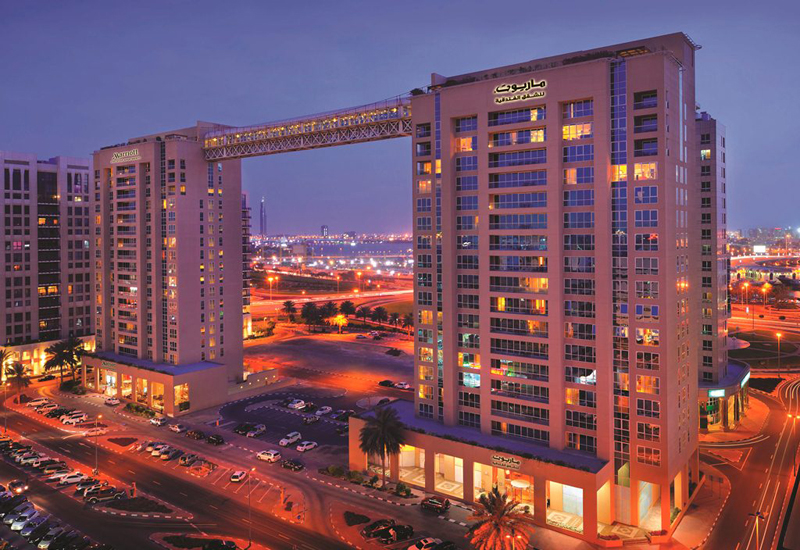
Hossein Garan, general manager of Marriott Executive Apartments Dubai Creek adds that serviced apartments in many Middle East destinations are increasingly being seen as “a viable alternative to hotels for travellers with families, who often prefer to use the kitchen facilities to eating out in restaurants in order to stretch their holiday budgets further. The main advantage is a hassle-free experience for people coming for a year or two for a specific assignment,” he continues.
David Spooner, vice president, sales & marketing for Banyan Tree Hotels & Resorts agrees that the increased flexibility that comes with long-stay is becoming more and more attractive to guests.
He says: “Customers want their own space and want to be able to make their own decisions about when and where they want to eat and how long they want to stay. Design, technology, privacy, location and food and beverage outlets are all key considerations when choosing where to stay,” adds Arora, who has noticed a need to provide first-rate internet access, especially for business travellers.
And for Farid, in a metropolitan city like Dubai, guests are strongly focused on finding a convenient property location, “however they still consider the size as a major factor”.
For Filippo Sona, head of hotels at Colliers International in the MENA region, one aspect of the long-stay offering in the Middle East that must be improved is the kitchen area, and international hotel chains are generally better at offering high standards in this area.
He states: “Branded hotel apartments have shown a greater ability to capture the long-stay segment, which can be explained by their superior kitchen facilities. Therefore, particular attention should be given to the unit design in order to deliver the desired look and feel.”
Spooner agrees that services and facilities should be second to none.
“Cassia will set the stage for hotel residences of the future with its wide array of facilities including a pool, gym, mini convenience mart, home delivery service and touch screen concierge,” he says.
For international hotel chains like Viceroy and Kempinski, one fail-safe solution for introducing serviced apartments with excellent standards of service is tagging an apartment property on to a hotel development.
The benefits are clear according to Madkour, “ranging from an increase in diversification in business, convenience in terms of activities surrounding the property, and added value”.
Donna Ullah, leasing manager, Kempinski Residences & Suites, Doha points out that residents can gain access to great restaurants, and other entertainment within a compound, which certainly serves to increase the desirability of this type of accommodation.
Another issue is alcohol, and Garan says that serviced apartment properties are rarely able to obtain a license to serve alcoholic drinks since, with very few exceptions, the licensing authorities will only allow properties classified as “hotels” to serve alcohol. Being part of a complex can negate this issue.
It’s certainly a model Banyan Tree Group is keeping in mind with Cassia. Spooner states that each property will be located in the heart of a key tourist destination and “some will be close to other Banyan Tree Group properties and integrated resort complexes”.
A complex property can also be more financially viable to investors and operators.
Ullah and Arora point out that hotel apartments provide stability, Arora adding that: “They usually strike a balance between short- and long-term business to optimise yield. During high season they tap into short stays and during low season they usually focus on long stays.Long-term residents also provide a captive audience for a hotel’s F&B outlets, spa and other ancillary revenues.”
For Nicolas, the clear benefit is a steady stream of room revenue and controlled costs with hotel apartments traditionally having limited F&B facilities.
“However, we are seeing a growth in guest culinary knowledge and curiosity,” he explains. “With the diversity of nationalities visiting the UAE, our F&B facilities are working on offering our long-stay guests more healthy and organic options.”
While the UAE is doing relatively well in provision of international hotel company standards in long-stay lodging, there are other destinations in the region that are lagging behind.
“The serviced apartment market still has plenty of room to grow in Kuwait, Bahrain, and Oman,” says Sona.
“Dubai is the most developed market regionally, while Abu Dhabi, Doha and the KSA cities of Riyadh and Jeddah are currently emerging with forthcoming internationally-branded supply,” Sona adds.
However Ullah believes that Doha is doing very well in terms of its long-stay offering: “There is already a wide range of serviced accommodations available which suit varying budgets and preferences. This is something Doha has done well,” she says.
Hewett says TRI’s market research throughout the GCC has noted a “significant shortage of good quality branded serviced apartment properties in the majority of the markets, especially Saudi Arabia”.
Dubai alone needs to double the number of hotel rooms and apartments from 82,000, according to Arora, especially with 2020 in mind.
“Like the four and three-star hotel segment, the city’s serviced apartment sector is undersupplied.
“The sector is currently dominated by local developers, but we anticipate a growth in branded hoteliers looking at this segment and introducing their own international brands to the market, ” Arora asserts.
In comparison to other GCC countries, the UAE is expecting the highest volume of serviced apartment supply, with 8731 keys due by 2018.
Sona highlights “major anticipated openings between 2015 and 2017”, which include Radisson Blu Residence Marina Dock, Marriott Executive Apartments City Walk, Fraser Suites Al Jadaf, and The Address Fountain Views in Dubai.
With regards to forthcoming supply, the Citadines by Ascott brand is anticipated to make its Middle East debut in Jeddah by 2015, with two properties. And while for the big MICE markets such as Abu Dhabi the long-stay segment has not fared well in the past, since typically events last no longer than a week, this situation is now starting to change.
“In the past it was different but in recent years there has been a drastic development in the MICE market in Abu Dhabi that has impacted our guest mix,” says Nicolas.
“During key events like Formula 1, ADIPEC and IDEX we are looking at occupancy levels above 95%.”
Hewett reinforces this point, since while there is limited demand from MICE guests for long-stay accommodation, large conferences and events could result in overflow demand, which shouldn’t be ignored.
Arora argues that serviced hotel apartments offer the ideal accommodation for those travelling for business for extended periods of time and “demand is intrinsically linked to the MICE market”.
According to Farid, his property is partnering with some of the biggest corporate companies in Dubai to provide them with “a comfortable long-term stay as well as targeting MICE operators”.
And so whether the target is MICE, long-stay, transient corporate or families, there are plenty of vertical markets for long stay providers; and as long as they are providing the services expected by the modern guest, success should be found in the near and long term.


